What is actually on the shelf
Your size is two numbers. Almost every store stocks one of them.
Roughly a third of adult feet are not a medium, and the footwear industry orders mediums, because a medium sells through. Below is the grid of men's sizes and widths this shop keeps in the building, with the single column a chain store carries marked inside it. The shape of the filled area is the whole argument.
| Width | 7 | 8 | 9–11 | 12 | 13 | 14 | 15 | 16 |
|---|---|---|---|---|---|---|---|---|
| 2A Extra narrow | not stocked | stocked | stocked | stocked | not stocked | not stocked | not stocked | not stocked |
| B Narrow | stocked | stocked | stocked | stocked | stocked | not stocked | not stocked | not stocked |
| D Medium | stocked | stocked | stocked | stocked | stocked | stocked | stocked | stocked |
| 2E Wide | stocked | stocked | stocked | stocked | stocked | stocked | stocked | stocked |
| 4E Extra wide | not stocked | stocked | stocked | stocked | stocked | stocked | stocked | not stocked |
| 6E Widest made | not stocked | not stocked | stocked | stocked | stocked | stocked | not stocked | not stocked |
In the building today Ordered in, about a week The column a chain store carries
Read the shaded column, then read the rest. A big-box shoe wall is essentially one vertical stripe of that grid: sizes nine to eleven, width D, in whatever the brand shipped. If your foot lands in that stripe, buy shoes anywhere and pay less for them, and we will tell you so. If it does not, you have been trying to solve a width problem by going up a size, which lengthens the shoe past your arch and is why the heel slips.
Sorted by whose foot, not by what we sell
Five feet the industry does not order for.
These are the five that walk in having already given up. None of them is unusual and none of them is a medical condition on its own. They are simply shapes that a purchasing department in another state decided not to buy, and the resulting belief that the foot is the problem.
Wide at the ball, narrow at the heel.
A foot that needs a 2E across the forefoot and a B at the heel. In a single-width world you fit the wider part, because the ball of the foot has bones in it and the heel does not, and then the shoe slips at every step. People describe this as their heel being too small. It is not; the shoe is one shape and the foot is two.
Left alone it produces a blister at the back of the heel, a gripping toe, and eventually the belief that all new shoes have to be broken in, which they do not.
A high instep. The shoe still will not close.
Width is a measurement across the ball. It says nothing about how much foot there is vertically, and a foot can be a perfect D across and still have too much volume for the shoe to lace down. Going up a width buys room in the wrong axis and leaves the foot swimming sideways while the laces still cut across the top.
This one is usually diagnosed wrong for years, because every measurement anyone has taken came back normal.
A foot that swells between morning and evening.
Feet are bigger at the end of the day, most feet by a little and some feet by most of a width. If the shoe was fitted at ten in the morning it is a different shoe at six in the evening, and the fitting was measuring the wrong foot.
Where swelling is substantial or new, the shoe is not the first question, and we will say that plainly rather than sell around it. Persistent or sudden swelling in one or both feet is something to take to a physician, and this shop is not one.
A half size, or a full width, between left and right.
Very common, rarely mentioned, almost never accommodated, because shoes are sold in pairs and no distributor will split one. Most people know which foot is bigger and have spent years buying for the smaller one because that is the shoe that felt right in the shop.
Buying for the smaller foot is the wrong way round every time. A shoe can be made smaller after the fact and cannot be made bigger.
A child's foot, measured once and bought ahead.
A growing foot is measured sitting and standing, because it lengthens under load and the standing figure is the one that matters. It also does not grow evenly: a child can hold a size for eight months and then move a full size in six weeks, which is why buying a size up in April is a plan that produces a tripping hazard in April and a tight shoe in October.
School shoes are also the one purchase where the child is the least reliable witness. A child will say a shoe fits because they want that shoe.
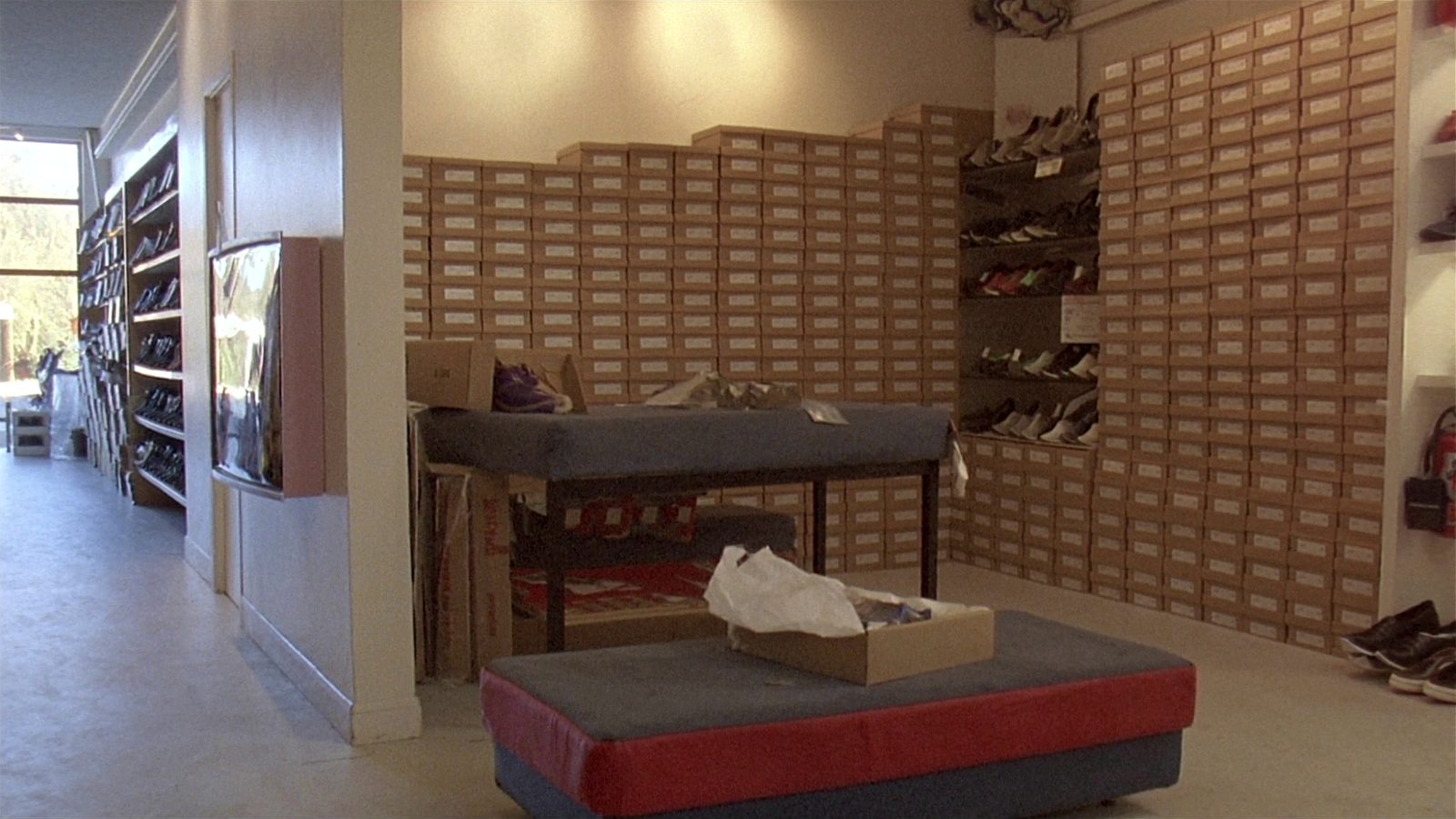
The corner all of this happens in
Nobody is fitted standing at a wall of boxes.
You sit down on one of those, both shoes come off, both feet get measured, and somebody kneels on the floor and puts a hand on the shoe while you stand in it. That takes about twenty minutes and it is the reason to come here rather than order four sizes and send three back.
How we measure
Three numbers. The third one decides it and nobody takes it.
The sliding metal device we stand you on has three scales on it, and most people who have ever used one have only been told the first number off it.
Heel to toe
Overall length, standing, on both feet. This is the number everybody gets told and it is the least interesting of the three, because it only tells you whether the shoe is long enough not to crush your toes.
Width across the ball
Measured at the widest point, under load. This is where the letters come from. It is the number the industry mostly declines to stock for, which is what the grid at the top of this page is about.
Arch length
Heel to the ball of the foot, which is where the shoe has to bend. A shoe that is the right overall length but too long in the arch flexes past your joint instead of at it, and that single mismatch causes more discarded shoes than either of the other two numbers. It takes four seconds to read and almost nobody reads it.
Before you come in
Four house rules, stated up front.
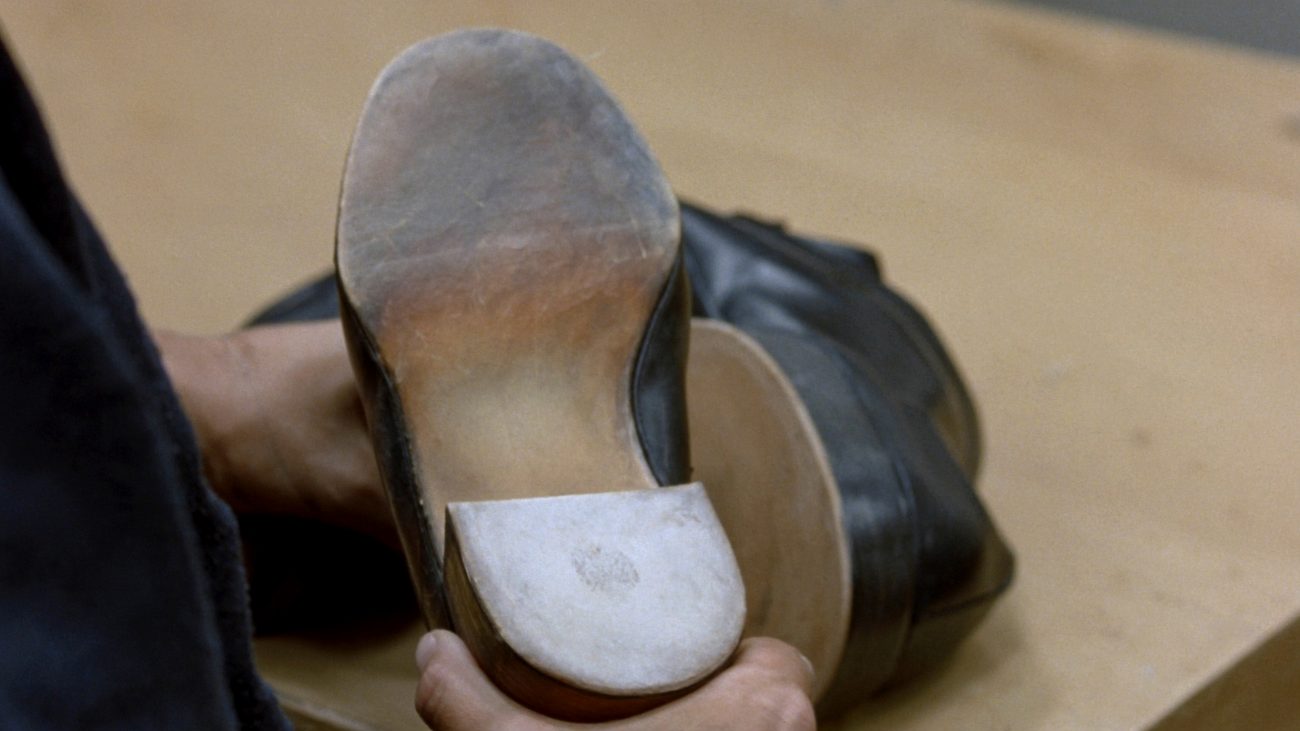
- Bring the shoes you are wearing out. The wear on the sole and the shape the upper has taken tell us more in ten seconds than you can tell us in ten minutes, and there is no charge for the reading either way.
- Come in the afternoon if your day allows it. A foot fitted in the morning is a smaller foot. If mornings are all you have, say so and we will allow for it rather than pretend otherwise.
- Fittings are not booked and are not queued by appointment. If both fitters are with somebody there is a bench, and the wait is normally under fifteen minutes except Saturday afternoon, which is the one time we would tell you to come back.
- Custom insoles are made to your foot and are not returnable. That is said before the mould is taken, not after. Everything else in the shop goes back for thirty days, worn indoors, with or without the box.
If you would rather ask first, call (816) 555-0176 and describe the problem. The person who answers is a fitter.
- Where
- 6118 N Oak Trafficway
Gladstone, Missouri 64118
Parking behind the building, off the alley - Hours
- Monday to Friday, 10am to 6pm
Saturday, 10am to 4pm
Closed Sunday - Telephone
- (816) 555-0176
- What we do not do
- We do not sell online, we do not hold stock on a phone call, and we do not carry athletic performance shoes for competition. Three shops within two miles do that better than we would.